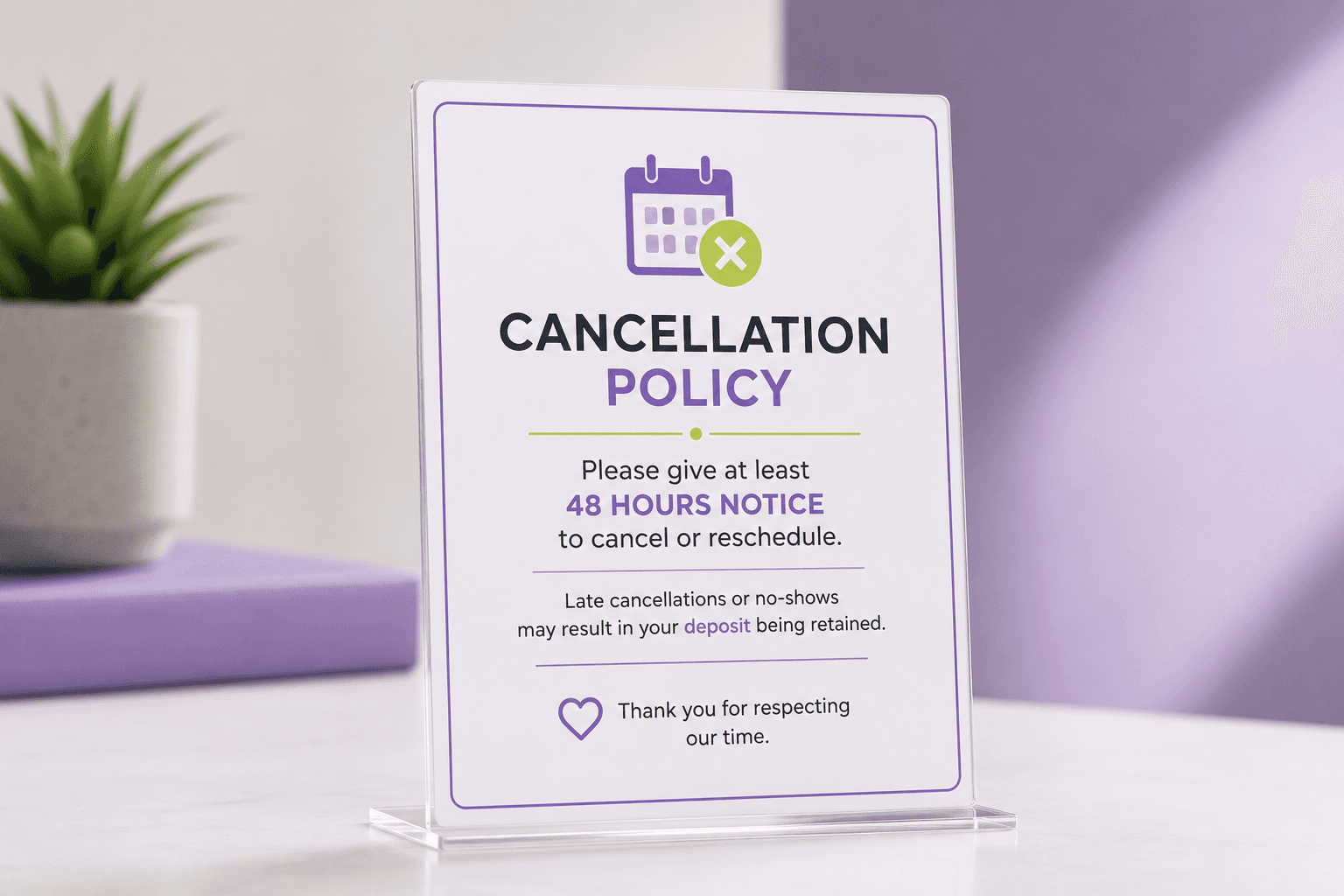
Last-minute cancellations are frustrating. Not just because you've lost an appointment — but because you've lost income that you often can't replace. A strong cancellation policy works hand in hand with the other steps covered in our guide to reducing no-shows in your beauty business.
An hour sitting in an empty treatment room is an hour you can't sell again.
That's why every beauty business should have a clear cancellation policy.
A good cancellation policy isn't about punishing clients. It's about setting expectations before appointments are booked, protecting your time and helping clients understand how your business works.
Whether you're a lash technician, nail technician, beautician, barber or hairdresser, having a professional cancellation policy is one of the simplest ways to reduce awkward conversations and build a more sustainable business.
In this guide we'll explain what your cancellation policy should include, how much notice to ask for, how deposits fit into the process and how to communicate your policy without upsetting loyal clients.
One cancelled £60 appointment every week adds up to more than £3,000 in lost revenue every year.
Most cancellations aren't malicious. But without a clear policy, they're far more likely to happen.
- Every beauty business should have a written cancellation policy
- Explain it before clients book
- Choose a notice period that suits your business
- Apply your policy consistently
- Make rescheduling simple
- Combine your policy with deposits and reminders
Why every beauty business needs a cancellation policy
Many beauty professionals delay introducing a cancellation policy because they're worried clients will think they're being strict.
The opposite is usually true.
Professional businesses set expectations. Restaurants have cancellation policies. Hotels have cancellation policies. Dentists have cancellation policies. Clients don't see these businesses as unfriendly — they simply expect clear rules.
Your time has value too.
Without a written policy, every cancellation becomes an individual negotiation. Some clients lose deposits. Others don't. Some are charged. Others aren't. That inconsistency quickly becomes stressful.
A cancellation policy removes emotion from the conversation. Instead of saying "I'm charging you because I'm annoyed," you're simply saying: "This is the policy every client agrees to when booking."
That feels fair — for everyone.
Businesses with clear booking terms often spend far less time dealing with awkward conversations about cancellations, simply because expectations were agreed before the appointment was ever booked.
Clarity upfront prevents conflict later.
What should a cancellation policy include?
A good cancellation policy answers the questions clients are most likely to ask — before they ever need to ask them.
At minimum, it should explain:
- How much notice clients should give
- What happens to deposits
- Whether appointments can be rescheduled
- What happens if someone doesn't attend
- How late is considered “late”
- What happens if you need to cancel
The clearer your policy is, the fewer awkward conversations you'll have later. Clients generally don't object to rules. They object to surprises.
How much notice should you ask for?
There isn't one perfect answer. The right notice period depends on your treatments and how easily cancelled appointments can be filled.
The longer the appointment, the more reasonable a longer notice period becomes.
Many beauty professionals choose 48 hours because it strikes a balance between protecting their diary and giving clients enough flexibility if plans genuinely change.
The important thing isn't choosing the “perfect” notice period — it's applying it consistently.
Late arrivals
Late arrivals can be just as disruptive as cancellations. If one appointment overruns, every client afterwards may end up waiting.
Your policy should explain exactly what happens if someone arrives late.
Every business is different. What's important is that clients know the rules before they arrive. Consistency avoids arguments.
Deposits and cancellation policies work together
A cancellation policy explains the rules. A deposit encourages clients to stick to them.
Without a deposit, your policy relies almost entirely on goodwill. With a deposit, clients have already committed financially — making late cancellations far less likely.
If you're already taking deposits, your cancellation policy should explain:
- When deposits are refunded
- When they're transferred
- When they're retained
Keeping these rules clear helps clients understand exactly where they stand. Our guide on how much to charge as a beauty deposit covers exactly which amounts work best for different services and how to communicate your policy without upsetting loyal clients.
With Glamly, your cancellation policy and deposit requirements work together during the booking process. Clients see your booking terms before confirming their appointment, helping set clear expectations from the very beginning while protecting your diary from costly last-minute cancellations.
Try Glamly free for 30 days →What if you have to cancel?
Cancellation policies shouldn't just protect your business. They should reassure your clients too.
Sometimes you genuinely have to cancel an appointment because of illness, an emergency or circumstances beyond your control. When that happens, communicate as soon as possible. Offer the earliest available alternative appointment or provide a full refund if a payment has already been taken.
Clients are usually very understanding when businesses are honest and proactive.
A cancellation policy should work both ways. It should explain what clients can expect from you just as clearly as it explains what you expect from them. Professionalism builds trust — and asking clients to complete a consultation form before their first appointment is another simple way to set professional expectations from the start.
Make your cancellation policy impossible to miss
One of the biggest mistakes beauty professionals make is hiding their cancellation policy in tiny text that nobody ever reads. If clients only discover your policy after they've cancelled, they'll naturally feel frustrated.
Instead, mention it throughout the booking journey. A good cancellation policy should appear:
Clients shouldn't have to search for your terms. The easier your policy is to find, the more likely people are to respect it.
Should you ever make exceptions?
This is probably the question beauty professionals struggle with most.
What if it's one of your best clients? What if they've been coming to you for years? What if they've had a genuine emergency?
There isn't one correct answer. Many businesses choose to use discretion occasionally. For example:
- A hospital emergency
- Family bereavement
- Car breakdown
- Severe illness
These situations are very different from repeatedly forgetting appointments. The important thing is that exceptions remain exactly that — exceptions. If your cancellation policy changes depending on how awkward the conversation feels, clients quickly learn that the rules aren't really rules.
Being kind doesn't mean being inconsistent.
Offer rescheduling, not punishment
Many cancellations don't need to become lost clients. If someone contacts you with enough notice, make rescheduling as easy as possible. Clients appreciate flexibility.
Instead of focusing on penalties, focus on protecting the booking. Moving an appointment to another date keeps the relationship positive while still protecting your income.
Good cancellation policies aren't about catching clients out. They're about encouraging better behaviour.
What should you do after a no-show?
No-shows are frustrating. But your response can determine whether you lose a client forever or simply prevent it happening again.
Most clients who genuinely value your time will understand. Protecting your diary isn't rude. It's good business.
Many repeat no-shows happen because businesses never change anything after the first missed appointment.
Introducing deposits or requiring manual approval after a missed booking often prevents the same behaviour from happening again.
Bringing it all together
A cancellation policy isn't about saying “no.” It's about respecting everyone's time — including your own.
When clients know exactly what happens if they cancel, arrive late or need to reschedule, misunderstandings become far less common.
The most effective cancellation policies are simple, fair and consistently applied. Combined with deposits, automated reminders and professional communication, they help protect your income while creating a smoother experience for every client.
Remember: good clients don't expect businesses to have no rules. They expect businesses to have clear ones. Once your policy is in place, the next step is building the kind of loyal client base that rarely needs reminding — our guide on increasing repeat bookings covers how to do exactly that.
Many beauty professionals introduce a cancellation policy only after they've experienced several costly no-shows.
In reality, putting your policy in place before it becomes a problem is far more effective — and much easier than changing client expectations later.
The Glamly Team works closely with independent UK beauty professionals every day. The advice in our guides is informed by real businesses using Glamly — the challenges they face, the questions they ask, and the approaches that actually work. We review our guides regularly to keep the information accurate and relevant. Our focus is practical, actionable advice that helps beauty professionals run better businesses.