If you've ever had a client say “I forgot to mention I'm allergic to that” or “I didn't realise the aftercare instructions were so important” — then you already understand why consultation forms matter.
Many beauty professionals think consultation forms are simply paperwork. They're not. A good consultation form protects you, helps you deliver better treatments, records important client information and creates a far more professional experience from the very first appointment.
Whether you're a lash technician, nail technician, beautician, barber, hairdresser or aesthetics practitioner, consultation forms should be part of every new client journey.
In this guide, we'll explain what a consultation form should include, when clients should complete it, how to store records properly and how digital consultation forms can save hours of admin every month.
Why consultation forms matter
Consultation forms do much more than collect information. They help you identify allergies, record medical conditions, understand treatment goals, capture client consent, explain aftercare and protect your business if questions arise later.
Without accurate records, you're relying on memory. As your client list grows, that simply isn't realistic.
- What every consultation form should include
- Which beauty treatments should always include a consultation form
- Digital vs paper forms — the key differences
- How consultation forms protect your business
- Consent, signatures and storing records securely
- How to keep forms up to date over time
Consultation forms protect everyone
Some beauty professionals only introduce consultation forms because insurance providers recommend them. While that's important, they're valuable for another reason: they improve client care.
A thorough consultation helps you understand exactly what your client wants, identify anything that could affect treatment and make recommendations based on their individual circumstances.
Clients also appreciate being asked. It shows you're taking their safety seriously rather than rushing straight into treatment. Professional businesses ask questions before they begin — and that's exactly what clients expect.
What should a consultation form include?
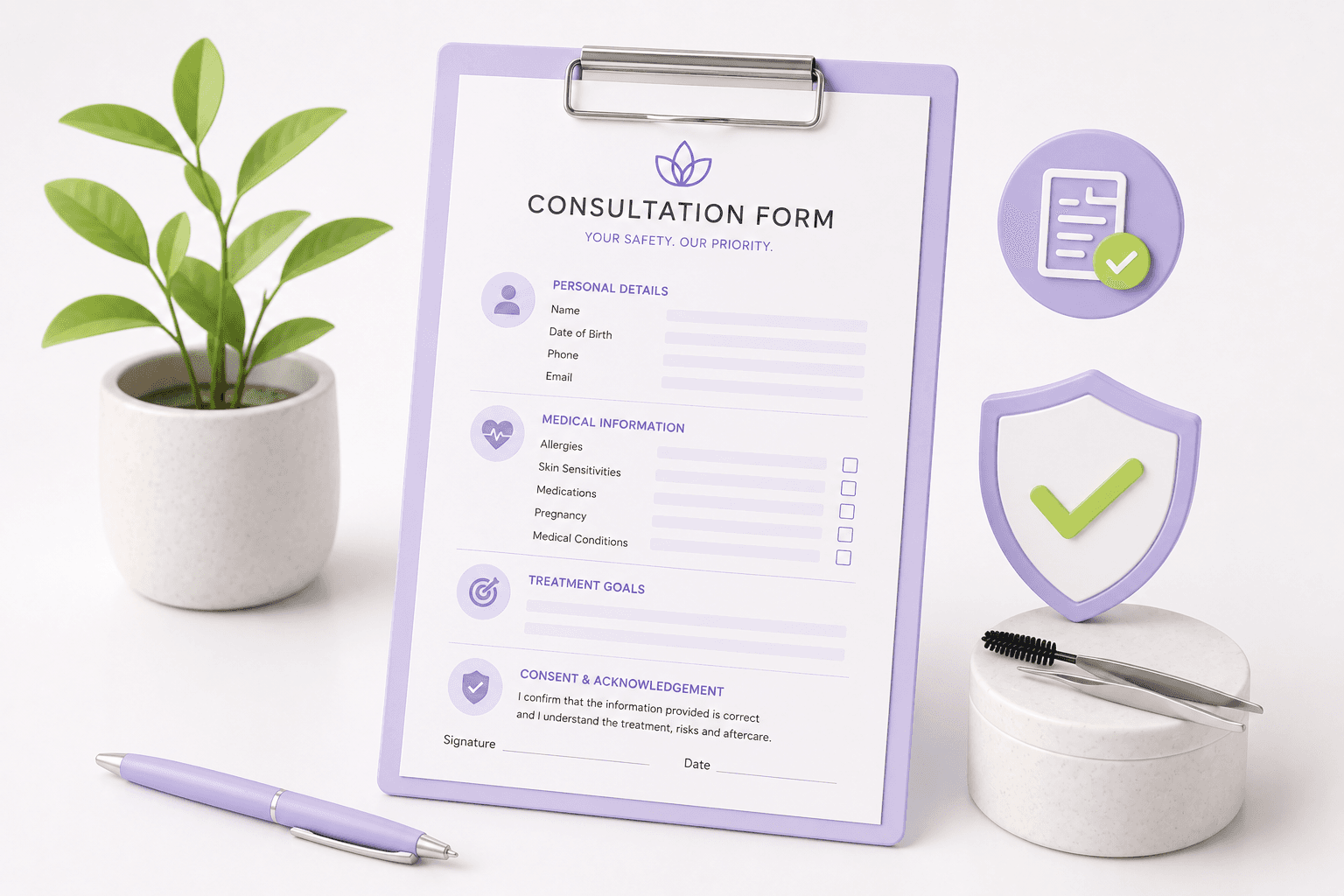
Every treatment is different, but most consultation forms should collect the same core information.
Personal details
- Full name
- Mobile number
- Email address
- Date of birth (where appropriate)
Medical information
- Allergies
- Skin sensitivities
- Current medications
- Pregnancy
- Recent medical treatments
- Relevant health conditions
Treatment history
- Previous treatments
- Previous reactions
- Current products being used
- Previous technician or salon
Client goals
This is often overlooked. Instead of jumping straight into treatment, ask questions like “What result are you hoping to achieve?” or “What concerns do you have?” These answers help avoid misunderstandings later — and often save you from having to redo work.
Always explain what clients are agreeing to
Signing a consultation form should never feel like signing a contract full of legal language. Instead, explain things clearly.
Clients should understand what treatment they'll receive, possible risks, expected results, aftercare responsibilities, your cancellation policy and whether you take photographs of their work.
Good communication builds trust. Clients are much happier signing something they genuinely understand — and far less likely to raise concerns afterwards.
Many client complaints happen because expectations weren't discussed before the appointment — not because the treatment itself was poor.
A thorough consultation often prevents misunderstandings before they happen.
Paper or digital consultation forms?
For many years, paper consultation forms were the standard. Today, more beauty professionals are switching to digital forms because they're easier to complete, easier to store and easier to update.
Paper forms can get lost, become damaged, be difficult to read, take up storage space and require manual filing. Digital consultation forms allow clients to complete everything before they arrive, reducing admin time and giving you a chance to review their answers before the appointment begins.
For busy beauty professionals, that small time saving quickly adds up across dozens — or even hundreds — of clients per month.
Clients can complete digital consultation forms before they arrive, with responses automatically stored against each client profile and reviewable from any device. That means less paperwork, faster appointments and better client records.
Try Glamly free for 30 days →Store consultation forms securely
Consultation forms often contain personal and health-related information, so they should be stored securely and only accessed by people who genuinely need them.
If you're using paper forms, keep them in a locked cabinet rather than leaving them on a reception desk or treatment trolley.
Digital records are generally easier to protect because they can be encrypted, backed up automatically and accessed securely from different devices.
Whatever system you use, make sure you can quickly locate a client's consultation history if you ever need it. Good record keeping isn't just organised — it demonstrates professionalism.
A consultation isn't a one-time event
One of the biggest mistakes beauty professionals make is treating consultation forms as something a client fills in once and never revisits.
People's circumstances change. Clients may become pregnant, start new medication, develop allergies, change skincare products, undergo medical procedures or simply change the look they're trying to achieve.
That's why it's good practice to review consultation information regularly. For regular clients, even a simple question such as “Has anything changed since your last appointment?” can highlight important details before treatment begins.
Keeping records current protects both you and your client.
Consultation forms improve the client experience
Some beauty professionals worry that consultation forms create unnecessary friction. In reality, they usually have the opposite effect.
Clients often feel more confident when they're asked thoughtful questions before treatment. It tells them you're paying attention. It shows you care about their safety. It demonstrates that you're treating them as an individual rather than simply working through appointments as quickly as possible.
A professional consultation sets the tone for everything that follows. When clients trust you from the beginning, they're more likely to return — and more likely to recommend your business to others. That trust also makes it easier to ask clients to rebook at the end of each appointment, which is one of the most effective habits covered in our guide to increasing repeat bookings.
With Glamly, consultation forms can be completed online before the appointment, giving you time to review important information before your client arrives. Responses are stored securely alongside each client profile, making it easy to review previous consultations, update information over time and keep everything organised in one place.
Try Glamly free for 30 days →Ask only what you need to know
Long forms can feel overwhelming. Very short forms often miss important information. The goal is to find the right balance.
Ask questions that genuinely help you deliver a safe treatment. Avoid collecting information “just in case” if it isn't relevant to your treatments. Clients are far more likely to complete a concise, well-designed consultation form than pages of unnecessary questions.
Good consultation forms feel conversational rather than intimidating. If a client hesitates over a question, that's a sign it might need clearer wording — not more detail.
Use your consultation to educate clients
A consultation isn't just about gathering information. It's also the perfect opportunity to explain what happens after the treatment.
Clients who understand aftercare are more likely to achieve better results, avoid complications, return for maintenance appointments and leave happier reviews.
Whether it's lash aftercare, nail aftercare, skincare advice or colour maintenance, setting expectations before treatment usually leads to better outcomes afterwards. Clients who feel informed feel cared for — and that feeling is what keeps them coming back. Taking a deposit at the time of booking also sets a professional tone and reduces no-shows before the appointment even begins.
Review the consultation before every appointment
It only takes thirty seconds. Before your client arrives, quickly review their allergies, previous notes, treatment history, photos and any concerns they raised last time.
That quick review often reminds you of important details that help personalise the appointment. Clients notice when you remember them. Even something as simple as “Last time you mentioned your skin had become more sensitive — how has it been since then?” shows genuine care and attention.
Small moments like this build long-term loyalty.
Bringing it all together
Consultation forms aren't simply paperwork to satisfy insurance requirements. They're one of the easiest ways to deliver safer treatments, improve communication and create a more professional client experience.
Whether you're seeing someone for the first time or welcoming back a regular client, having accurate consultation records helps you work with confidence — and gives your clients confidence in you.
Start simple. Ask the right questions. Keep records up to date. Review them before every appointment. Over time, consultation forms become one of the most valuable parts of running an organised beauty business.
Many beauty professionals now ask clients to complete consultation forms online before their appointment, saving valuable treatment time while ensuring important information is recorded before the client arrives.
With Glamly, consultation forms are stored alongside each client's booking history — so everything you need is in one place, every time.
The Glamly Team works closely with independent UK beauty professionals every day. The advice in our guides is informed by real businesses using Glamly — the challenges they face, the questions they ask, and the approaches that actually work. We review our guides regularly to keep the information accurate and relevant. Our focus is practical, actionable advice that helps beauty professionals run better businesses.