If you've ever had a client cancel at the last minute — or simply not turn up at all — you've probably asked yourself the same question. Reducing no-shows starts with understanding why they happen — and deposits are one of the most effective tools available.
Should I be taking deposits?
For many beauty professionals, the answer feels obvious.
But then the doubts start creeping in.
“Will clients think I'm being greedy?”
“What if they refuse to pay?”
“How much should I actually charge?”
“Will I lose bookings?”
The truth is, booking deposits have become completely normal across the beauty industry. Whether you're a lash technician, nail technician, beautician, barber or hairdresser, most clients now expect to pay something upfront for longer appointments or higher-value treatments.
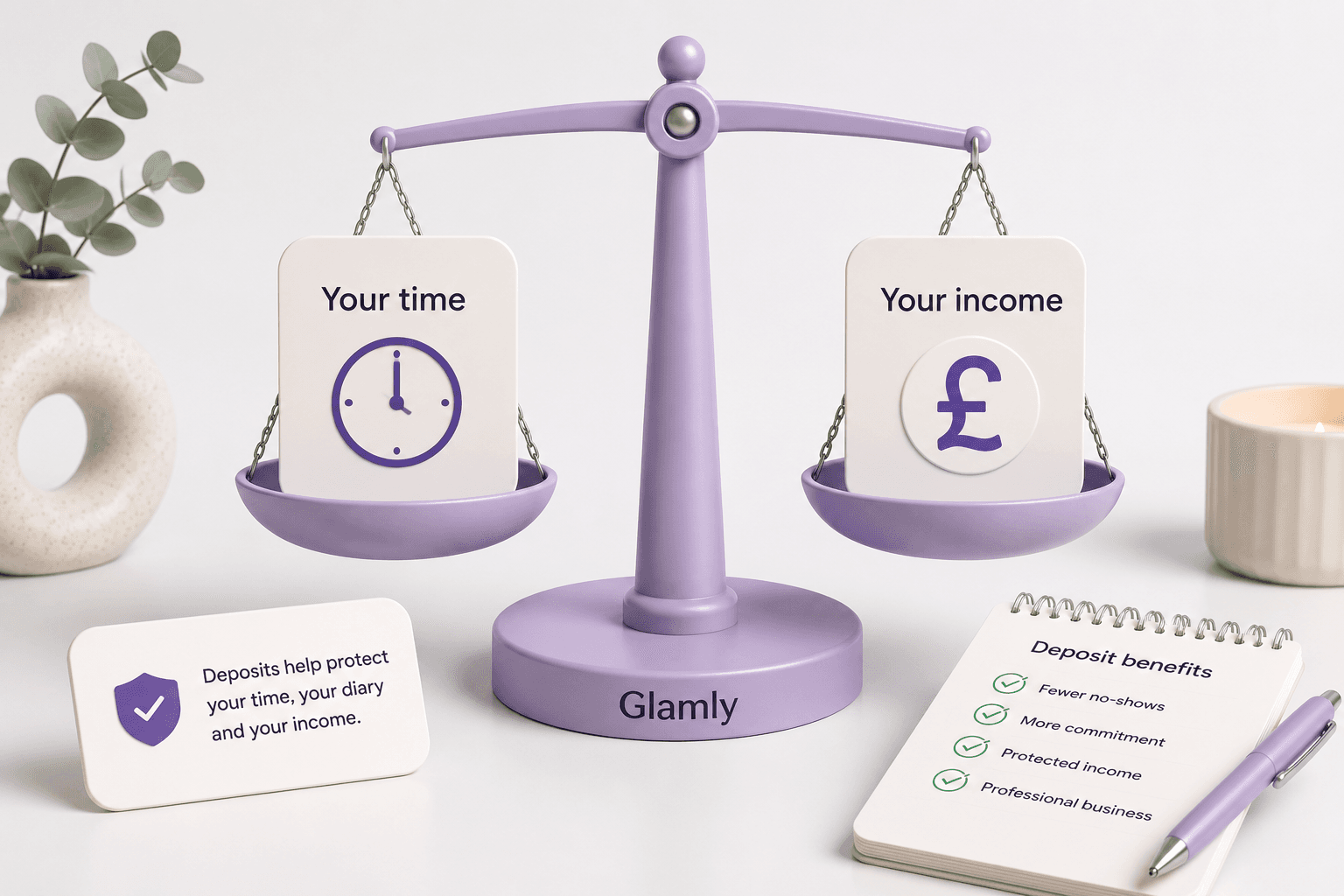
A well-written deposit policy doesn't push good clients away. It protects your time. Protects your income. And sets professional expectations from the very first booking.
In this guide we'll explain exactly how much to charge, when to collect deposits, how refunds should work and how to introduce deposits without upsetting loyal clients.
If your average appointment is £60, just two missed appointments per month could cost your business more than £1,400 every year.
A simple deposit policy can dramatically reduce that risk before it ever happens.
Deposits create commitment
The biggest reason deposits work isn't because clients are worried about losing money.
It's because paying something — even a small amount — creates commitment.
Psychologists call this the commitment effect. Once someone has invested in something, they're far more likely to follow through. The exact amount matters less than the fact they've already made a decision.
Think about restaurants. Hotels. Flights. Even hair appointments. Paying upfront changes the mindset from:
“I'll see how I feel tomorrow.”
to
“I've already booked this.”
That's why deposits consistently reduce no-shows, last-minute cancellations and forgotten appointments. They're not a penalty for clients — they're a signal that your time has value.
Fixed amount or percentage?
There are two common ways beauty businesses collect deposits.
Fixed amount
A fixed deposit is a set pound amount regardless of the treatment cost. Common examples:
- £10
- £15
- £20
Fixed deposits work well for:
- Lash appointments
- Nail appointments
- Haircuts
- Beauty treatments
Clients understand fixed deposits immediately. They're simple to explain, simple to refund, and simple to remember. For most independent beauty professionals, this is the easiest option to start with.
Percentage deposit
A percentage deposit is calculated as a proportion of the total treatment cost. Common examples:
- 25%
- 30%
- 50%
Percentage deposits usually make more sense for:
- Colour appointments
- Hair extensions
- Bridal hair
- Bridal makeup
- Cosmetic treatments
- Long appointments worth several hundred pounds
Higher-value services involve more risk. If someone cancels a four-hour colour correction, you've probably lost the opportunity to fill that appointment. A percentage deposit reflects that.
So… how much should you charge?
There isn't one perfect answer. The right deposit depends on three things.
Treatment value
A £25 eyebrow wax doesn't need a £20 deposit. A £300 hair extension appointment probably does. The higher the appointment value, the more reasonable a larger deposit becomes.
Appointment length
The longer the appointment, the harder it is to refill. Thirty minutes can often be replaced. Four hours usually can't.
Demand
If you're fully booked weeks in advance, protecting your diary becomes much more important. Busy businesses generally benefit more from deposits than businesses with lots of availability.
A simple starting point
Many UK beauty professionals use something similar to this:
| Appointment value | Suggested deposit |
|---|---|
| Under £40 | £5–£10 |
| £40–£80 | £10–£20 |
| £80–£150 | £20–£30 |
| £150+ | 25%–50% |
Remember: there is no industry-standard deposit amount. These examples are intended as sensible starting points based on common practice among UK beauty professionals. The right amount depends on your services, cancellation policy and client base.
These aren't rules — they're starting points. As your business grows, you'll develop a feel for what works best for your specific clients and services. If you're also reviewing your treatment prices, our beauty business pricing guide walks through how to set and communicate your rates with confidence.
When should clients pay?
The answer is simple: during the booking process. Not afterwards. Not by bank transfer. Not by sending them a message later.
The easier the process is, the higher the completion rate. Modern booking systems allow clients to complete everything in a single flow:
- 1Choose a service
- 2Pick a time
- 3Pay the deposit
- 4Receive confirmation
All within a few minutes, without any back-and-forth messages. Removing manual steps also removes awkward conversations.
What should your refund policy say?
One of the biggest mistakes beauty professionals make is collecting deposits without explaining what happens afterwards.
Every deposit policy should clearly answer three questions.
When is a deposit refunded?
What happens if someone cancels late?
What if you have to cancel?
Clients should always know they'll receive either a full refund or the option to transfer their deposit. This is non-negotiable — and stating it clearly builds trust.
Display your policy clearly during the booking process — not buried in small print. For a complete breakdown of what to include, our guide on writing a beauty cancellation policy covers notice periods, late arrivals and what to do after a no-show.
Deposit collection with zero processing fees
With Glamly's deposit feature, you can require a fixed amount or a percentage of the treatment cost at the time of booking. Deposits go directly into your Stripe account and are automatically linked to the appointment. Unlike platforms such as Fresha and Booksy, Glamly doesn't charge a processing fee on deposits — helping you protect your diary without adding unnecessary costs.
Bringing it all together
Deposits aren't about making money before an appointment. They're about protecting your time, reducing no-shows and setting professional expectations from the very first interaction.
Whether you choose a £10 fixed deposit or a 30% deposit for longer appointments, the most important thing is consistency. Explain your policy clearly, collect deposits during the booking process and apply the same rules to every client. It's also worth pairing your deposit process with a client consultation form to protect your business and set expectations from the very first booking.
If you're still losing income to no-shows and late cancellations, deposits are one of the most effective changes you can make. Once the system is set up, it works in the background — protecting your diary without you having to chase anyone. Read our full guide on how to reduce no-shows in your beauty business for more strategies that work alongside a deposit policy.
Beauty professionals using Glamly can choose either fixed deposits or percentage deposits for every service individually, helping protect their diary without charging processing fees on deposits.
Deposits go directly into your Stripe account — no middleman, no commission.
The Glamly Team works closely with independent UK beauty professionals every day. The advice in our guides is informed by real businesses using Glamly — the challenges they face, the questions they ask, and the approaches that actually reduce no-shows and protect income. We review our guides regularly to keep the information accurate and relevant. Our focus is practical, actionable advice that helps beauty professionals run better businesses.